7 Cosmetic Dentistry Mistakes We See - And How to Avoid Them
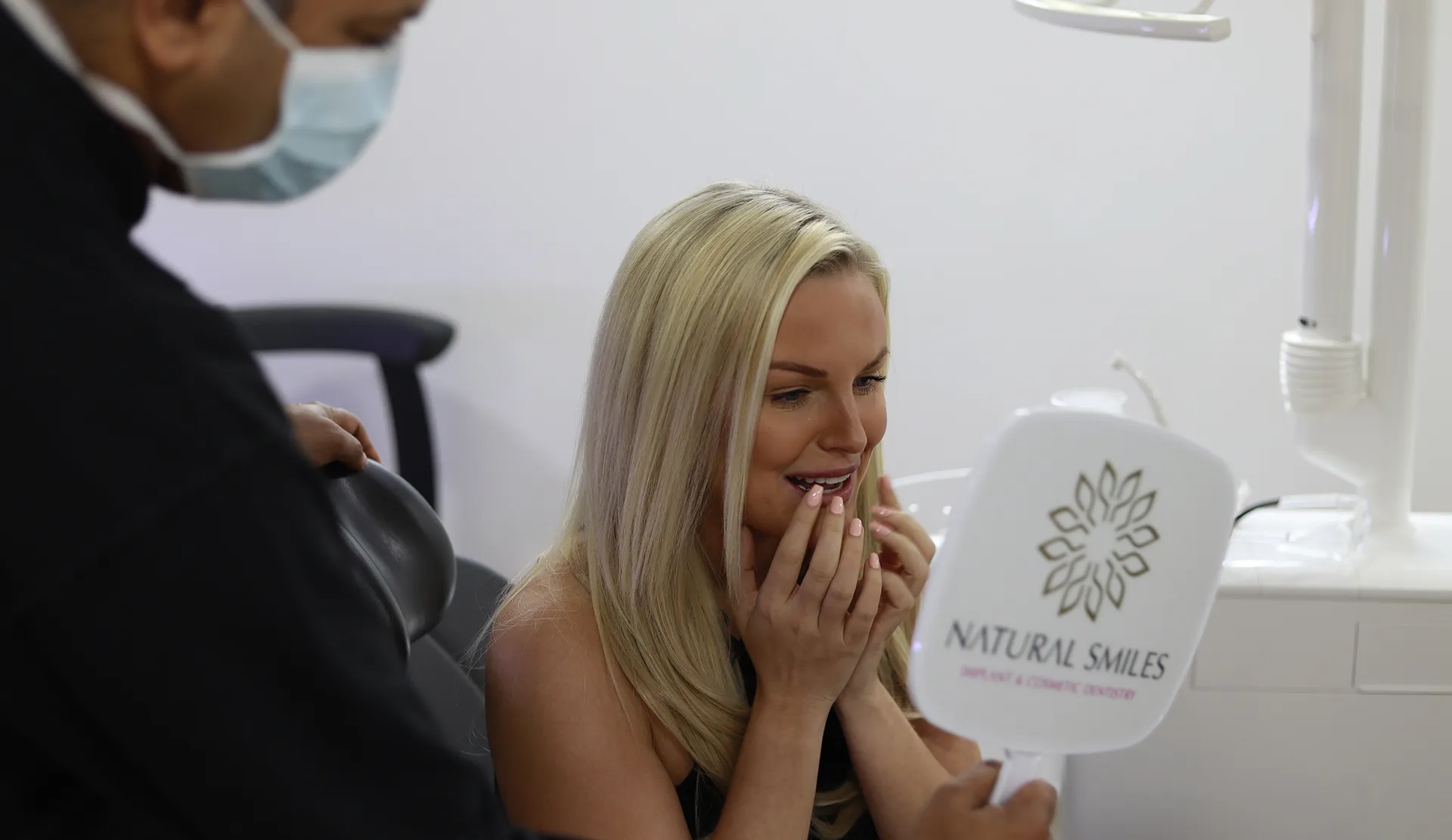
By Dr Bhavnish Waghela BDS, MFGDP, RCS(Eng) · Principal Dentist and Clinical Director, Natural Smiles Implant & Cosmetic Dentistry, Leicester
The short answer: the 7 most common cosmetic dentistry mistakes are (1) choosing on price alone, (2) not asking about maintenance, (3) choosing veneers when bonding is enough, (4) ignoring your bite, (5) skipping gum and dental health first, (6) not seeing a smile design before treatment, and (7) not checking who will actually do the work. You avoid every one of them by choosing a dentist who starts with your health, plans your whole smile, and tells you honestly which treatment suits each tooth.
A beautiful smile is a result of good planning, not just good porcelain. After more than 25 years in cosmetic and implant dentistry, I see the same avoidable mistakes again and again. Some come from patients who were never told the full picture. Others come from treatment that was started too quickly.
This guide is for you if you are thinking about veneers, composite bonding, crowns or a full smile makeover. It explains what to watch for, why it matters, and what a well-planned treatment looks like.
In this guide
- How we plan a smile before any treatment begins
- The 7 mistakes, each with the fix
- A comparison of bonding, veneers, crowns, implants and bridges
- A checklist to use at any consultation
- Answers to the questions we hear most
How does a cosmetic dentist plan a smile properly?
Cosmetic dentistry starts with dental health. Appearance comes second. Here is the order we follow with every patient, and the order you should expect from any good practice:
- Health first. Your gums must be healthy, and any decay, infection or damaged teeth are treated before anything cosmetic is considered.
- Your goal. We ask what you want your final teeth to look like, including shape, size and colour. Do you know someone whose teeth you admire? Bring a photo.
- Your smile line. We assess how much gum shows when you smile, and how much of your teeth are visible.
- Your face. We consider your age and face shape, so your teeth look right on you, not just in a brochure.
- Your bite. Your teeth need to be in the best position for how you bite and chew before they are restored.
- A two-dimensional smile design. This shows the ideal number of teeth to treat, and lets us choose the right restoration for each tooth.
For example, one missing tooth may need an implant or a bridge. A healthy tooth might receive a veneer purely to balance the left and right sides. The tooth next to it may need a crown. Not every tooth needs a veneer, and a good plan never treats them as if it does.
Mistake 1: Are you choosing a cosmetic dentist on price alone?
Yes, this is the most common mistake we see. The lowest quote is rarely the lowest cost over time. Two quotes can look similar on paper but cover very different things.
Before you compare prices, ask each practice:
- Does the quote include the health assessment, smile design and any preparation work?
- Who designs and makes the restorations, and where?
- What happens if a veneer chips, debonds or needs replacing?
- Is the price per tooth, or for a complete plan?
The fix: compare the whole plan, not the headline number. See our transparent fees page for how we present cost.
Mistake 2: Are you forgetting to ask about maintenance?
Every cosmetic restoration needs looking after. Bonding can stain or chip and is usually polished or repaired over time. Porcelain veneers are strong but are not indestructible, and they cannot be whitened. Your gums still need to be kept healthy around them.
- Ask how long each option typically lasts with good care.
- Ask what a review and polish programme looks like.
- Ask whether a night guard is recommended to protect your work.
- Ask what replacement would cost in the future.
The fix: treat maintenance as part of the treatment plan from day one, so there are no surprises in year five.
Mistake 3: Are you choosing veneers when bonding is enough?
Sometimes, yes. Veneers are a superb treatment in the right case. But if your teeth are healthy and the change you want is modest, composite bonding may achieve it with far less alteration to your natural teeth.
Porcelain veneers usually involve removing some enamel, which cannot be put back. That is why we always ask whether the least invasive option can deliver your goal first.
Why this matters: a treatment that removes less of your natural tooth keeps more options open for the future. Always ask: "Is there a more conservative way to get this result?"
Compare your options on our smile makeovers page, or read more about porcelain veneers and composite bonding. If you are weighing up bonding, our guide Is composite bonding right for me? goes into more detail.
Mistake 4: Are you ignoring how your teeth bite together?
Yes, and it is one of the costliest oversights. Your bite decides how much force each tooth takes every day. Cosmetic work on teeth that are out of position can chip, crack or fail early.
Very crooked teeth can be straightened with veneers. But this can mean removing a large amount of tooth structure. Over time, that can lead to root canal infections and, eventually, tooth loss.
In many cases, moving the teeth first with clear aligners and then making smaller refinements gives a healthier, longer-lasting result. The fix: insist that your bite is assessed before any cosmetic design is finalised.
Mistake 5: Are you skipping gum and dental health first?
Never build a smile on an unhealthy foundation. Gum disease, decay and infection must be treated before cosmetic work starts. Otherwise the new restorations can fail, and the underlying problems get harder to treat.
- Healthy, pink, firm gums frame the final result.
- Decay and infection under a veneer or crown can go unnoticed.
- Gum shape can often be refined as part of the plan.
The fix: a good cosmetic dentist will say "not yet" when your health needs attention first. That is a sign of care, not delay. Regular hygiene appointments are the simplest way to keep that foundation healthy.
Another real case: the foundation comes first
Before any cosmetic finishing, we look closely at the health of the gums and the teeth underneath. The photos below show the same patient from the front as they smile, and up close. Notice how much a healthy foundation and well-made restorations change the whole smile.
Smile: Before
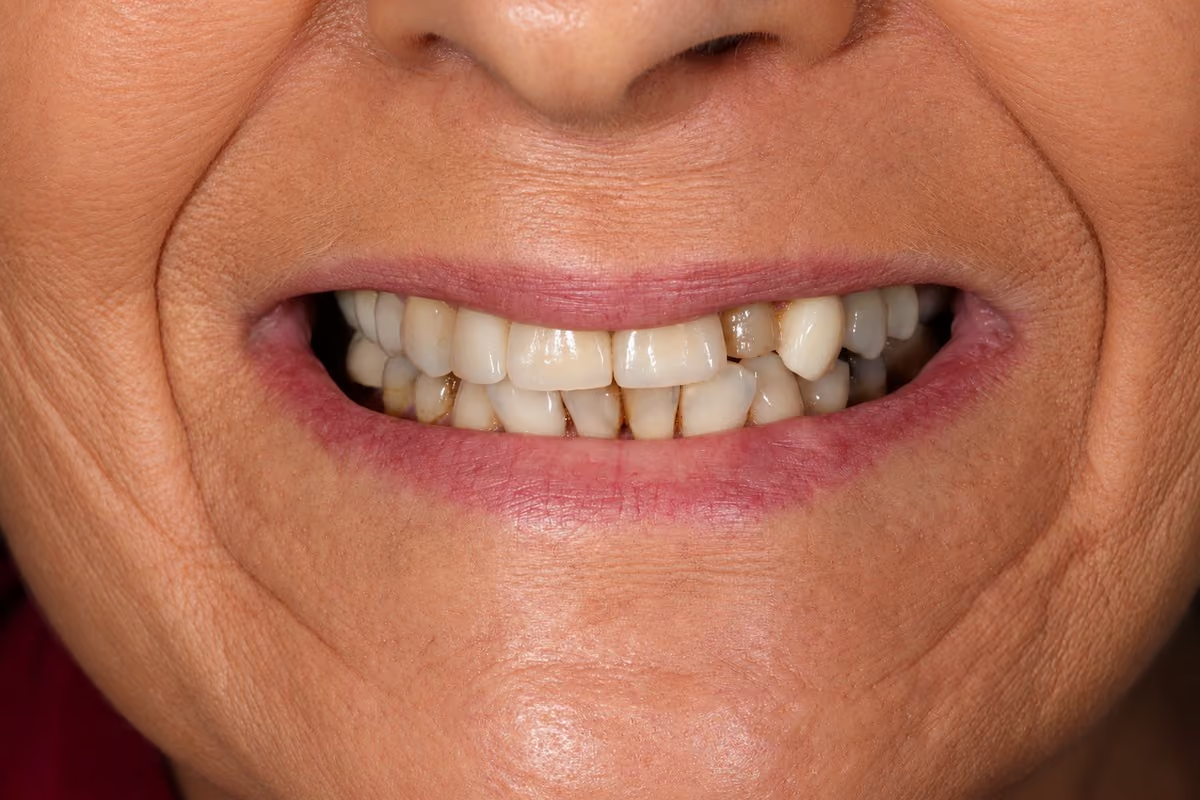
Discoloured, uneven teeth and a visibly darker tooth.
Smile: After
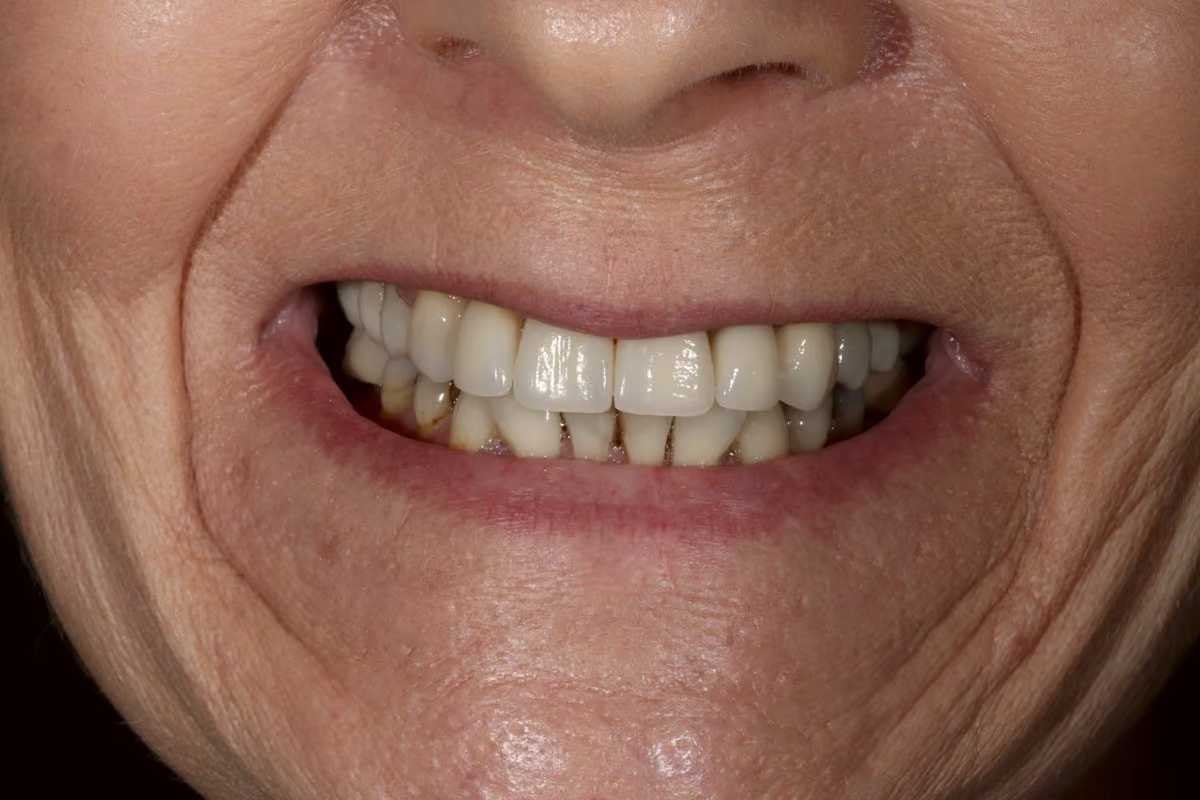
A brighter, more even smile line across the front teeth.
Close-up: Before
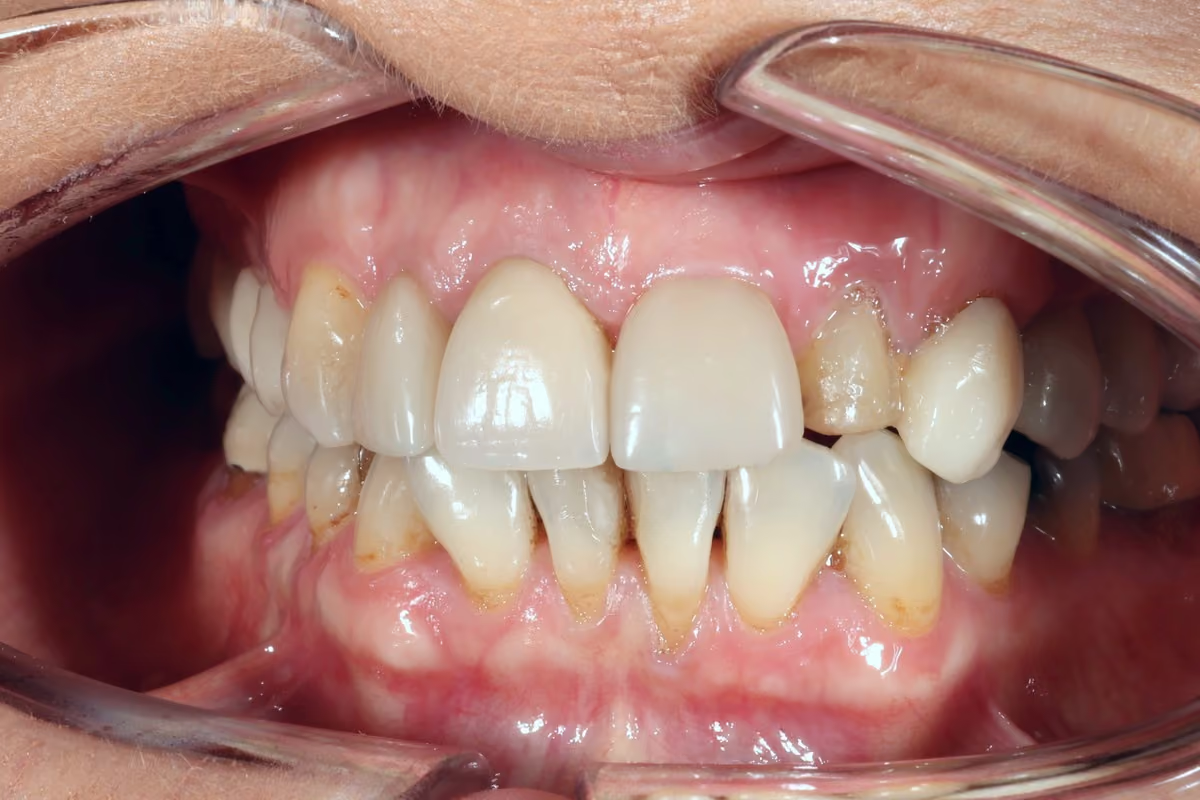
Staining and receded gums show why health comes first.
Close up: After
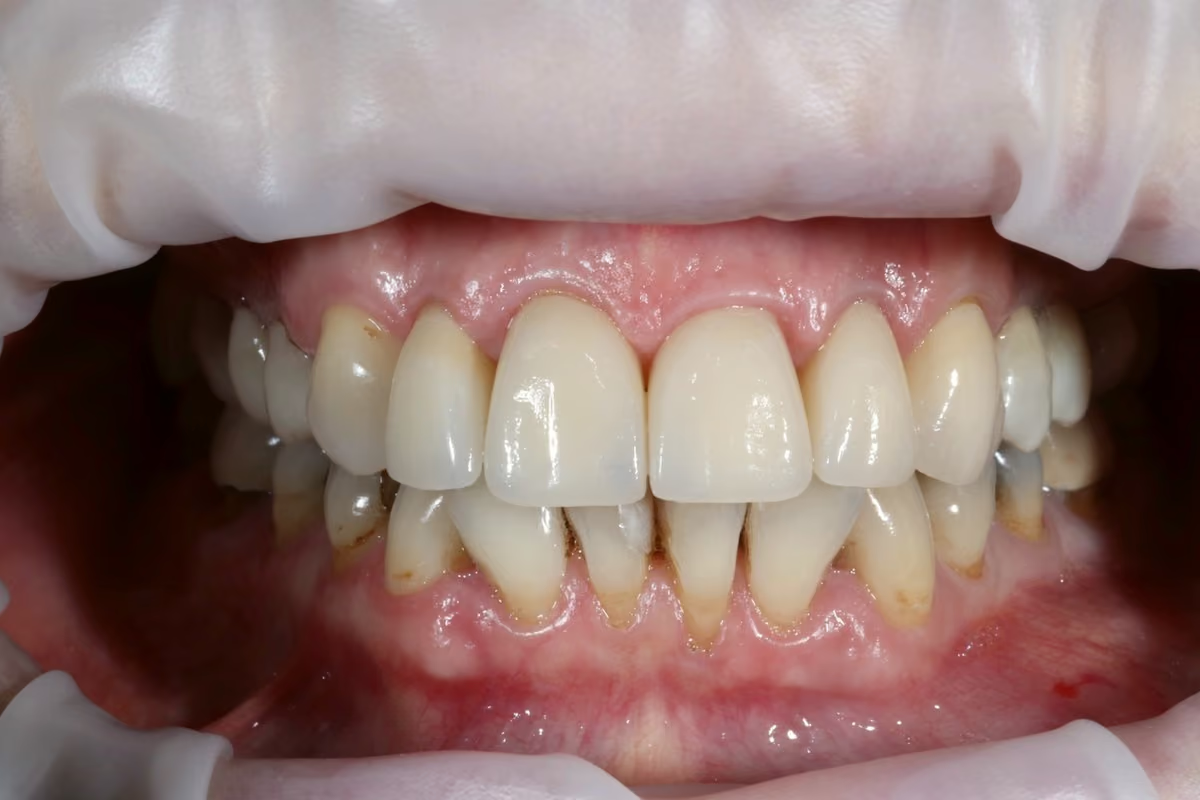
Refined restorations that blend with the neighbouring teeth.
Mistake 6: Are you agreeing to treatment without seeing a smile design?
You should see the plan before the work begins. A two-dimensional smile design shows how your new teeth will relate to your lips, gum line and face. It lets you give feedback while changes are still easy.
Without a design, you are relying on words alone. Ask to see a design, ask to see a preview of the shape and colour, and ask what can be adjusted along the way.
See it before it happens: a real smile design case
This is what a planned case looks like. First your starting point, then the smile design, then the finished result. The design is created before any treatment, so you can see and approve the plan.
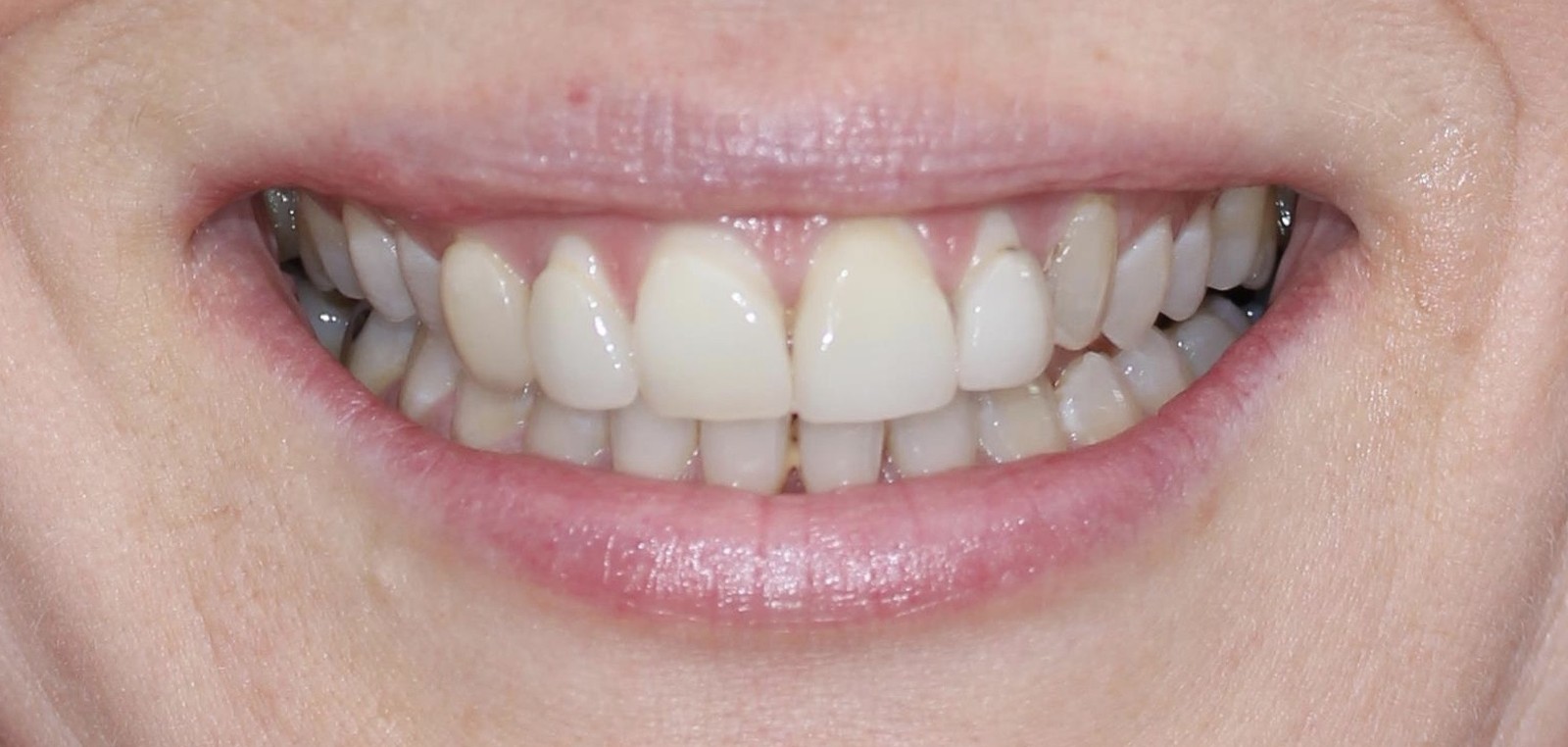
Step 1: Before. The starting point: uneven edges, mixed shades and teeth that do not balance left to right.
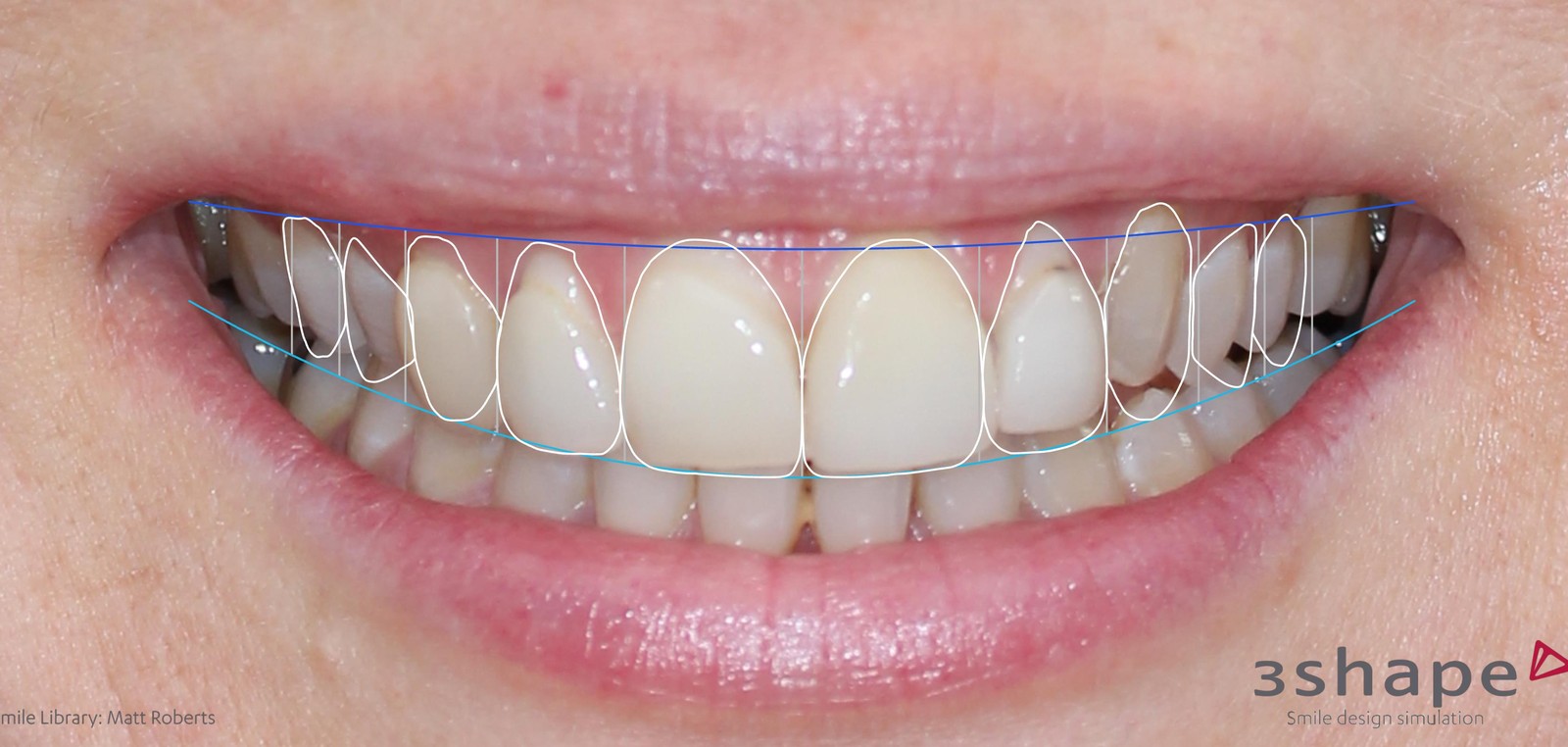
Step 2: Your smile design. The plan: tooth shapes, proportions and smile line mapped out digitally before any treatment begins.
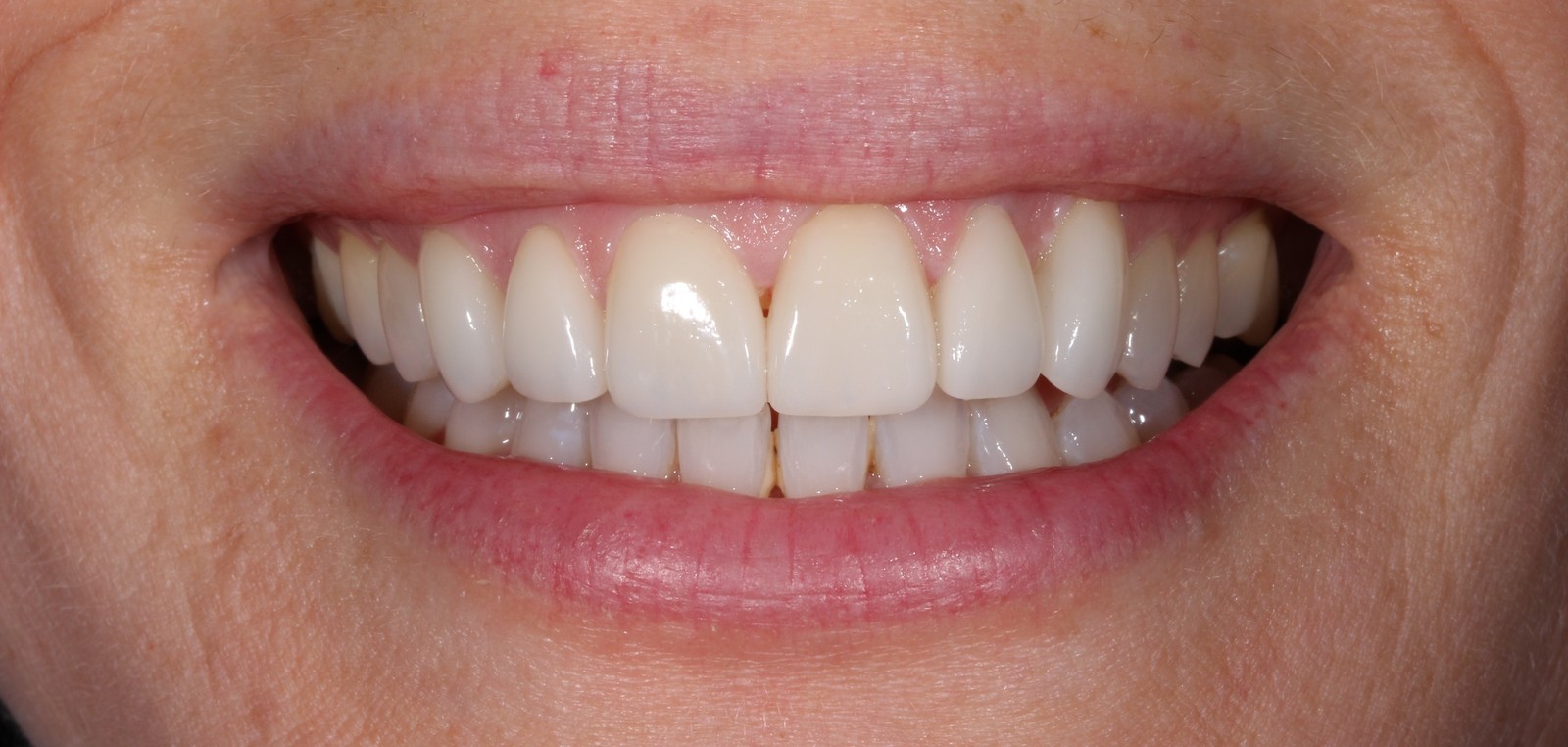
Step 3: After. The result: balanced shapes, a consistent shade and a natural smile line that fits the face.
Mistake 7: Do you know who is actually doing the work?
Training, experience and the dental lab matter as much as the material. Ask about your dentist's cosmetic training, how many cases like yours they have completed, and who makes your restorations.
- Ask to see before-and-after cases similar to yours.
- Ask about ongoing training and professional memberships.
- Ask whether the lab works closely with the dentist, so shade and shape can be fine-tuned.
- Read independent patient reviews.
Our restorations are crafted with our dental technicians at Fine Art Dental Studio, a private dental laboratory led by award-winning technician Hiten Parmar, so shade and shape can be fine-tuned together.
Meet the clinician behind this guide on Dr Bhavnish's profile on our team page. For more on choosing the right practice, see things to consider before choosing a cosmetic dentist.
Which restoration suits which problem?
Learn more about dental implants and our full range of treatments.
Your checklist before any cosmetic treatment
- I have had a full health and gum assessment.
- I have seen a smile design and understand it.
- I know why each tooth has been given its recommended treatment.
- I have asked if a more conservative option exists.
- My bite has been assessed.
- I understand the maintenance and likely future costs.
- I have seen similar completed cases and met my dentist.
Frequently asked questions
Is it better to have veneers or composite bonding?
It depends on your goal and your teeth. Bonding is more conservative and often suits smaller changes. Veneers suit larger changes to colour, shape and alignment but usually involve removing enamel. A good dentist explains both and recommends the least invasive option that meets your goal.
Do veneers damage your teeth?
Porcelain veneers generally involve removing a thin layer of enamel, which cannot be replaced. Done carefully on healthy teeth this is a well-established treatment. Problems arise when veneers are used to correct very crooked teeth, which can require significant tooth reduction and raise long-term risks.
What should I ask a cosmetic dentist before treatment?
Ask about your gum and dental health, whether a smile design will be shown first, which restoration each tooth needs and why, how your bite is assessed, what maintenance costs, and who makes your restorations. Ask to see similar completed cases.
Why does gum health matter before cosmetic dentistry?
Healthy gums are the foundation of a stable, natural-looking result. Untreated gum disease or decay can undermine new restorations and cause them to fail. We treat these first, so your cosmetic work is built on healthy teeth and gums.
Can I get cosmetic dentistry if my teeth are crooked?
Yes, but alignment should be considered first. Moving teeth with aligners can reduce how much tooth structure needs to be removed later. We assess your bite and goals together, then recommend aligners, bonding, veneers or a combination.
How do I choose a cosmetic dentist in Leicestershire?
Look for postgraduate training in cosmetic dentistry, a clear planning process, visible before-and-after cases, independent reviews, and honest advice about cost and maintenance. Choose the practice that is willing to say what you do not need.
More answers, including timelines and longevity, are on our smile makeovers page.
About the author: Dr Bhavnish Waghela
Dr Bhavnish Waghela BDS, MFGDP, RCS(Eng)
Dr Bhavnish is Principal Dentist and Clinical Director of Natural Smiles Implant & Cosmetic Dentistry, with the practice in Wigston, Leicester. He has over 25 years of experience in cosmetic and implant dentistry and is a former director of the British Academy of Cosmetic Dentistry. He has trained with leading international cosmetic dentists and holds a Diploma in Implant Dentistry from the Royal College of Surgeons of England.
Read his full profile: naturalsmilesleicester.co.uk/about/meet-the-team
Ready to plan your smile properly?
Book a consultation and we will assess your health, listen to your goals and show you what is possible, honestly.
Natural Smiles Leicester: 264-266 Leicester Road, Wigston, LE18 1HQ · Tel 0116 218 2181 · hello@naturalsmiles.co.uk
Book online: naturalsmilesleicester.co.uk/book/contact-us




A life-changing transformation, expertly delivered
Book an appointment for:
- Dental check-up
- Hygiene appointment
- Dental emergency
- Teeth whitening